ServicesDual Tank Water Filtration
Dual Tank Water Filtration in Camarillo
With a dual tank system, two filter tanks sit where water first enters your home, so the kitchen, showers and laundry all draw filtered water. We choose the location, add a bypass and shutoff valves, strap the tanks down and test each fitting for leaks before we go.
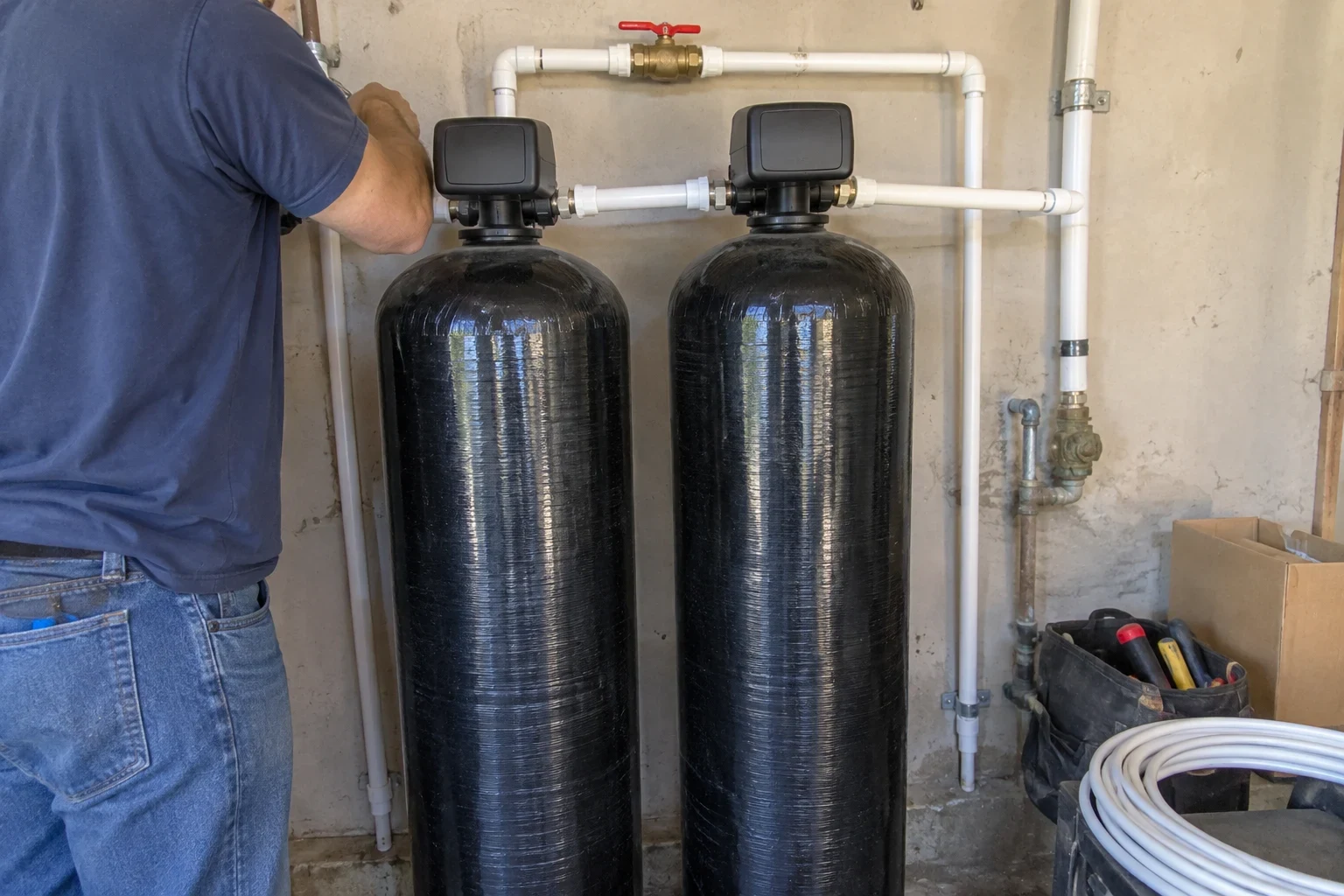
Two tanks sharing the work for every faucet
With a dual tank system, water flows through one tank and then the other, and each holds its own media. Because the job is divided, each tank can focus on one task, and the setup treats more water between service visits than an under-sink cartridge can.
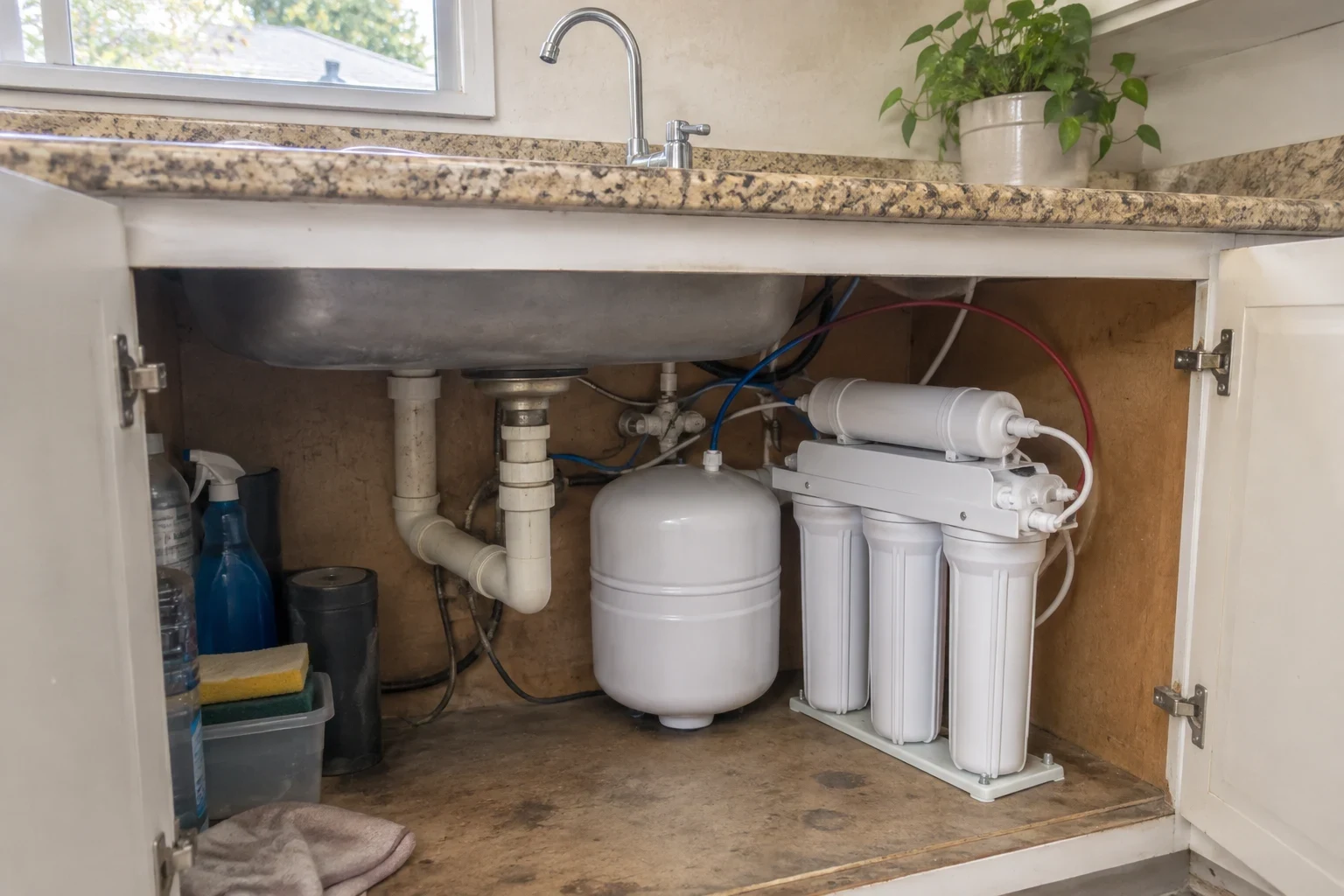
Choose it when you want filtered water in the kitchen, the showers and the laundry, not at a single faucet. If drinking and cooking water is all you're after, our Reverse Osmosis page may suit you better, and we'll say so on the call.
We plan the install around safety. A main line system connects to your water supply, your drain and in some homes your electrical ground, and we handle each of those carefully.
What you get with the install
Shutoffs and a bypass
With the bypass, you can take the system out of service while water still reaches the house. Valves on the inlet and outlet let us work on the tanks without draining every line.
Electrical ground protected
In many houses the metal water line helps ground the electrical system, and cutting it can interrupt that. We clamp a bonding wire across the new section so the ground path stays whole.
Air-gapped drain line
Tanks that flush themselves need a place for that rinse water. We run the line to an approved drain point through an air gap, so used water can never be drawn back into your supply.
Tanks held firmly in place
Filled tanks are heavy. Each one sits on a flat, level base with a strap, so a knock or a tremor won't tip it over and break a fitting.
First flush and leak check
New media releases fine dust at first. We send that to the drain, bring the system to full pressure and inspect each joint before we load up.
No charge for the install
Install is free; we cover the cost. On systems that use salt, free salt provided to tank upon install.
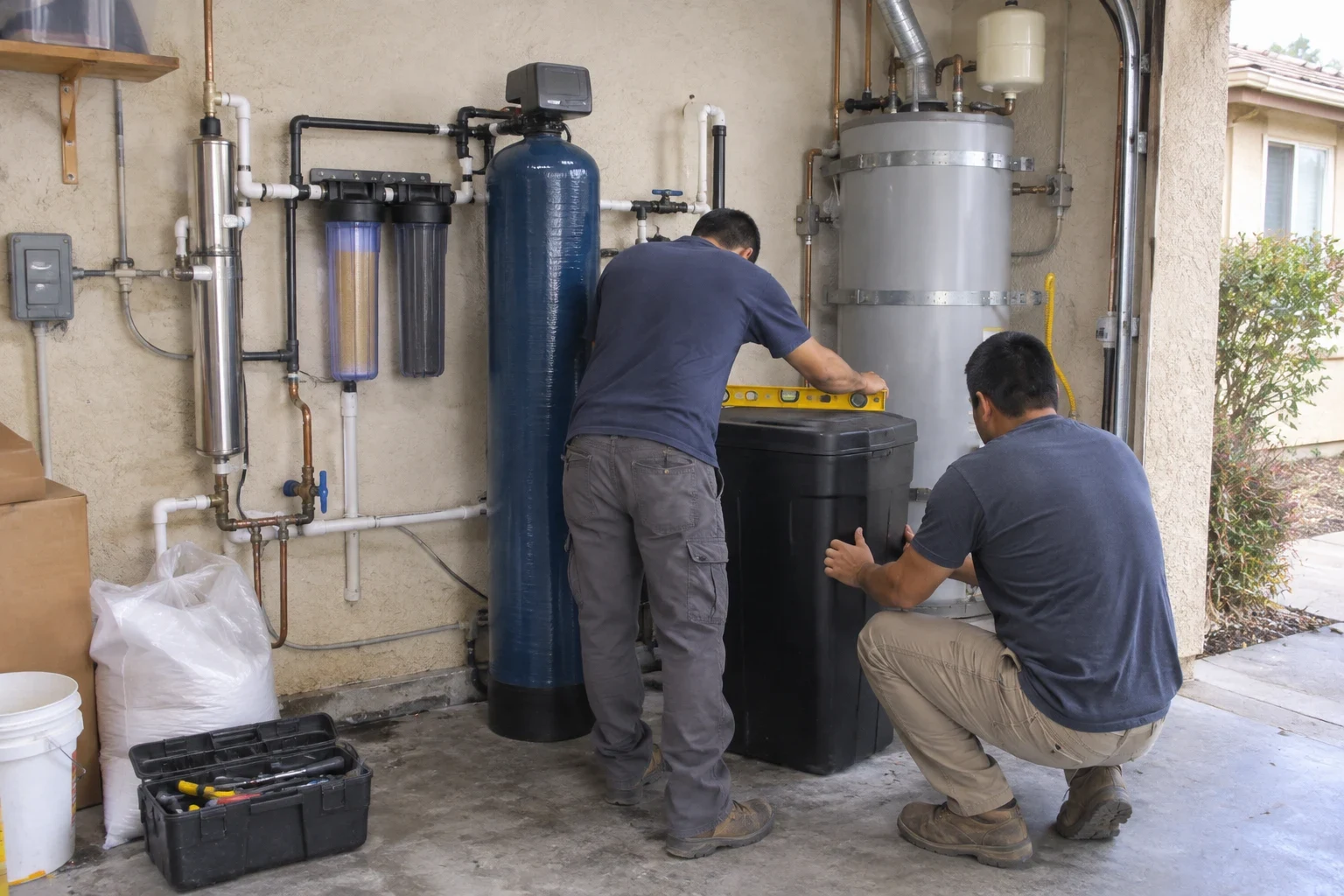
Signs a two-tank setup could help
- Chlorine smell in the shower
- If you notice the smell in the bathroom as well as at the kitchen tap, a filter on one faucet won't fix it. A main line system will.
- White buildup that returns
- Chalky deposits keep showing up on faucets, glass shower doors and the dishwasher no matter how often you clean.
- Separate filters all over the house
- A pitcher, a fridge cartridge, a shower head filter. A single main line system can replace the whole collection.
- A single tank that can't keep up
- An older one-tank system wears out fast in a house where lots of people use water. Two tanks split the demand.
- Your system has no bypass
- If turning off your filter cuts water to the entire house, that's worth fixing.
How the day goes
- 1
Phone conversation first
You tell us what you are noticing and where your main line comes in. We talk through whether a dual tank system fits and where it could go.
- 2
Pick a safe spot
Most installs go in the garage or near where the main line enters. We look for a level surface, a drain within reach and room to service the tanks later.
- 3
Water off, then plumbing
We shut off your water and tell you before we do it. Then we cut in the bypass, shutoffs and bonding jumper, and run the drain line with its air gap.
- 4
Fill, flush and test for leaks
We fill the tanks slowly to push out air, flush the new media and bring the line up to full pressure. Every fitting gets checked while you watch if you like.
- 5
Walkthrough and cleanup
We show you the bypass, the shutoffs and what to watch for. Then we clean up and take our packaging with us.
What moves the price
The install itself is free. Free install (we cover the cost). What changes the total is the equipment and what your plumbing needs to take it safely. You get your quote by phone before anything is scheduled.
- Tank size
- Larger tanks hold more media and suit larger households. Smaller homes often do fine with a smaller pair.
- Media choice
- What goes inside each tank depends on what you want removed. Some media costs more and lasts longer.
- Pipe condition and material
- Old galvanized pipe near the main line may need a short section replaced before we can connect safely. Copper and PEX usually tie in cleanly.
- Drain and power access
- If there is no drain or outlet near the spot, we may need extra line or a different location.
Dual tank questions we hear
- How is a dual tank system different from a single tank?
- A single tank holds one media bed doing everything. A dual tank system splits the work, so each tank can be matched to a different job. It also tends to hold up better when the household uses a lot of water.
- Will it lower my water pressure?
- Any filter adds some resistance. We size the tanks and fittings to your main line so the drop is small. If pressure feels off after install, the bypass lets us check the system without leaving you without water.
- Does it use salt?
- Some setups include a tank that uses salt and some do not. If yours does, free salt provided to tank upon install. We will explain which kind you are getting before we schedule.
- How much room do I need?
- Plan on a few feet of floor space near the main line, with a drain and an outlet close by. We also leave room in front so the tanks can be serviced later without moving anything.
- Can I add reverse osmosis at the kitchen sink too?
- Yes. Some homeowners pair a dual tank system with an under-sink reverse osmosis unit for drinking water. The tanks also help protect the RO membrane from chlorine and sediment.
- What happens if a tank leaks later?
- Turn the bypass valve and close the shutoffs. Your home still has water while the system is isolated. Then give us a call and we will sort it out.
Ready to talk about a dual tank system
Tell us how your water looks and smells and where your main line comes in. We will tell you plainly whether two tanks are the right fit for your home.