ServicesWell Water Filtration
Well Water Filtration in Camarillo
Sand in the faucets, orange stains in the tub or a rotten-egg smell at the tap all come from what your well pulls up. We fit filters that take those out, and we do the work with the pump powered down and the pressure bled off.
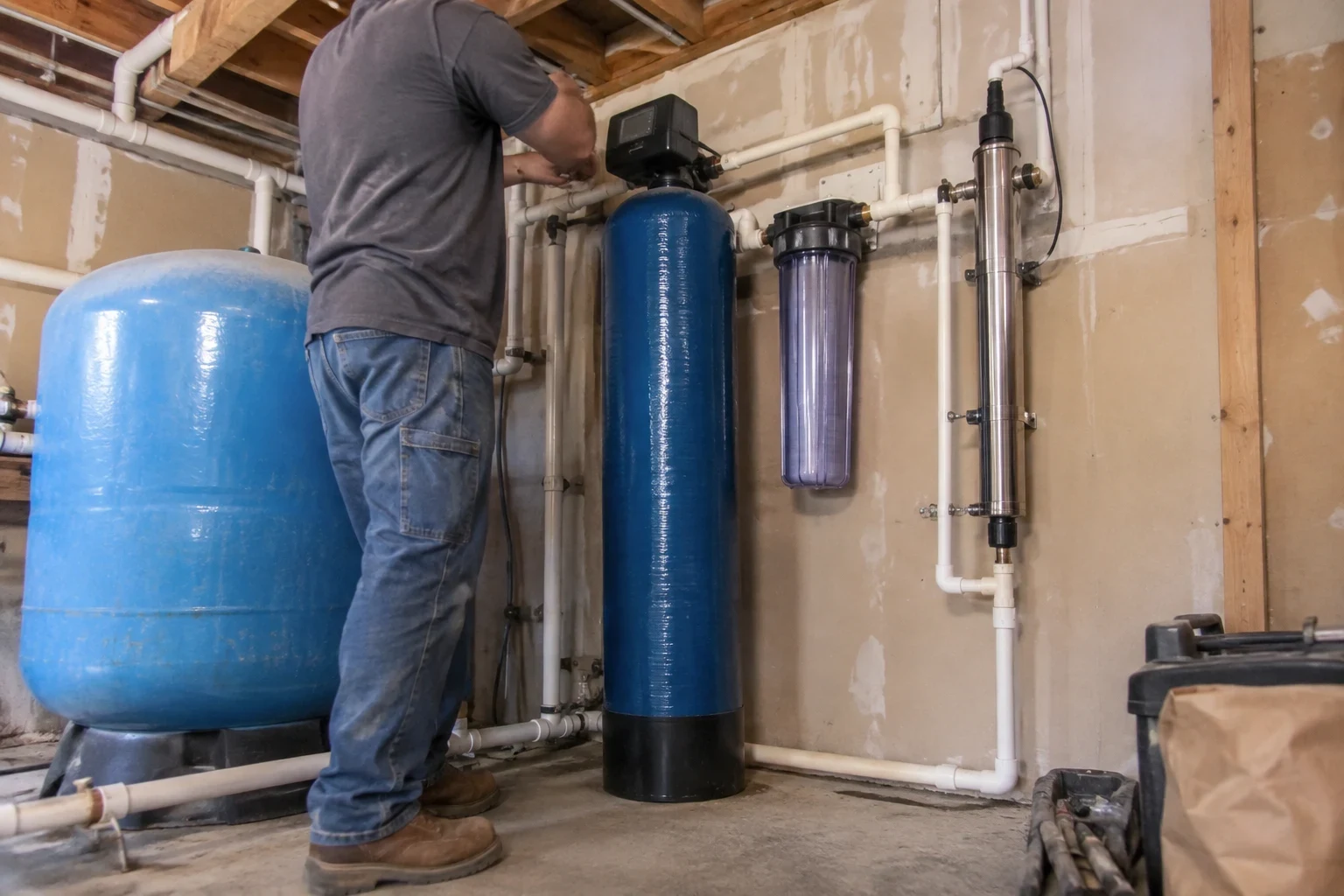
Careful filtration for private wells
With a private well, your water is your responsibility. No one treats it before it reaches you. What the pump draws up can include sand, iron, manganese or a sulfur odor, and that mix can change by season and by how hard the pump works.
We put the filtration on the line just past your pressure tank, so grit and staining minerals are removed before water reaches your faucets, water heater and fixtures. Each job begins with the pump breaker switched off and the system drained. A well system holds pressure and sits beside electrical equipment, and we handle both carefully.
On city water? Our City Water Filtration page explains that setup. For cleaner water to drink at the kitchen sink, Reverse Osmosis can be added downstream of the well filter.
What goes into a well filter install
- Sediment filter up front
- This catches sand and grit before it reaches your valves, toilets and water heater. We pick a spin-down screen or a cartridge housing based on how much the well throws.
- Media tank matched to your water
- Iron, manganese and sulfur smell each call for the right filter media. We size the tank to your pump's flow and the number of people in your home, so showers and laundry don't lose pressure.
- Bypass valve
- A bypass lets water run around the filter during service or if something ever needs a look. We show you where it is and how to turn it.
- Clean connections
- New fittings, drinking-water-rated parts and housings sanitized before they go into service. Nothing that touches your water comes out of a dirty truck bin.
- Leak check and walkthrough
- We bring the system back up slowly, check every joint under pressure and walk you through what to change and when.
Clues your well water needs filtering
Rust-colored marks
Orange or brown rings in the tub, toilet and sinks usually mean iron. It also discolors clothes and collects inside fixtures.
Dark specks or gray marks
Manganese is the usual cause. Even small amounts can leave dark spots on porcelain and laundry.
Sulfur odor
A rotten-egg smell, often stronger from the hot tap, shows up in many wells. It's hard to live with and can darken silver and copper.
Grit in screens and valves
Plugged faucet screens, sandy toilet tanks and valves that stick mean sediment is getting in. Over time it wears out parts and collects in the water heater.
Murky water after big demand
Water that clouds up after the sprinklers run or a long dry stretch can mean the well is kicking up fine particles. A sediment stage keeps them out of the house.
What changes the price
No two wells are alike, so we size the system before giving a price. The install is free, with the cost covered by us. The total depends on the equipment your water needs, and you hear it by phone once we understand your setup.
What your water carries
Sediment by itself takes less equipment than iron, manganese and sulfur combined. Each added problem tends to mean another stage or a bigger tank.
Household size and flow
A large family or a powerful pump needs a filter that keeps pace without losing pressure. Tanks that are too small plug up quickly and cost more in the long run.
Room around the pressure tank
Cramped pump houses, garages and long runs of pipe may call for added fittings or another layout.
Drain and outlet for backwash
Media tanks that clean themselves need a drain and an outlet close by. When those are farther away, the layout takes a little more work.
How the job runs
- 1
Start with a conversation
Describe the stains, smell or grit showing up in your home, and mention any lab results you have for the well. We'll ask about your pump, your pressure tank and the route your main line takes.
- 2
A look at your setup
We come out and look at the wellhead, pressure tank, electrical and available space. Then we explain which filter fits and why, in plain terms.
- 3
Safe shutdown
On install day we switch off power to the pump at the breaker, close the main valve and bleed the pressure to zero before any pipe is cut. Your water is off for a few hours, and we tell you before it goes off.
- 4
Install, startup and cleanup
We plumb in the filter and bypass, sanitize the housings, then bring the pump back on and flush the lines. We check for leaks under full pressure, clean up the work area and show you how to run it.

Well filtration questions
What should I know about my water before I call?
Old test results for the well are the most useful thing you can share, so have them handy for the call. No report is fine too. Tell us what you see and smell, like stains, a sulfur odor, grit or cloudy water. That gives us enough to start narrowing down the right filter.
Will a filter make my well water safe to drink?
These filters take out sediment, iron, manganese and sulfur smell. They are not a disinfection system and do not treat bacteria. Keep sending samples from your well to a lab on a regular schedule. If you want extra filtration for drinking and cooking, we can add Reverse Osmosis at the kitchen sink.
Will I lose water pressure?
Not if the system is sized right. We match the filter to your pump's flow and how much water your home uses at once. A clogged cartridge can cut pressure, so we show you when to swap it.
How much upkeep is there?
Sediment cartridges get changed when they load up, often every few months on a sandy well. Backwashing tanks clean themselves on a timer. We show you both before we leave.
How long is the water off on install day?
Usually a few hours. We tell you before we shut it down and bring it back on slowly so air and loose sediment flush out of the lines.
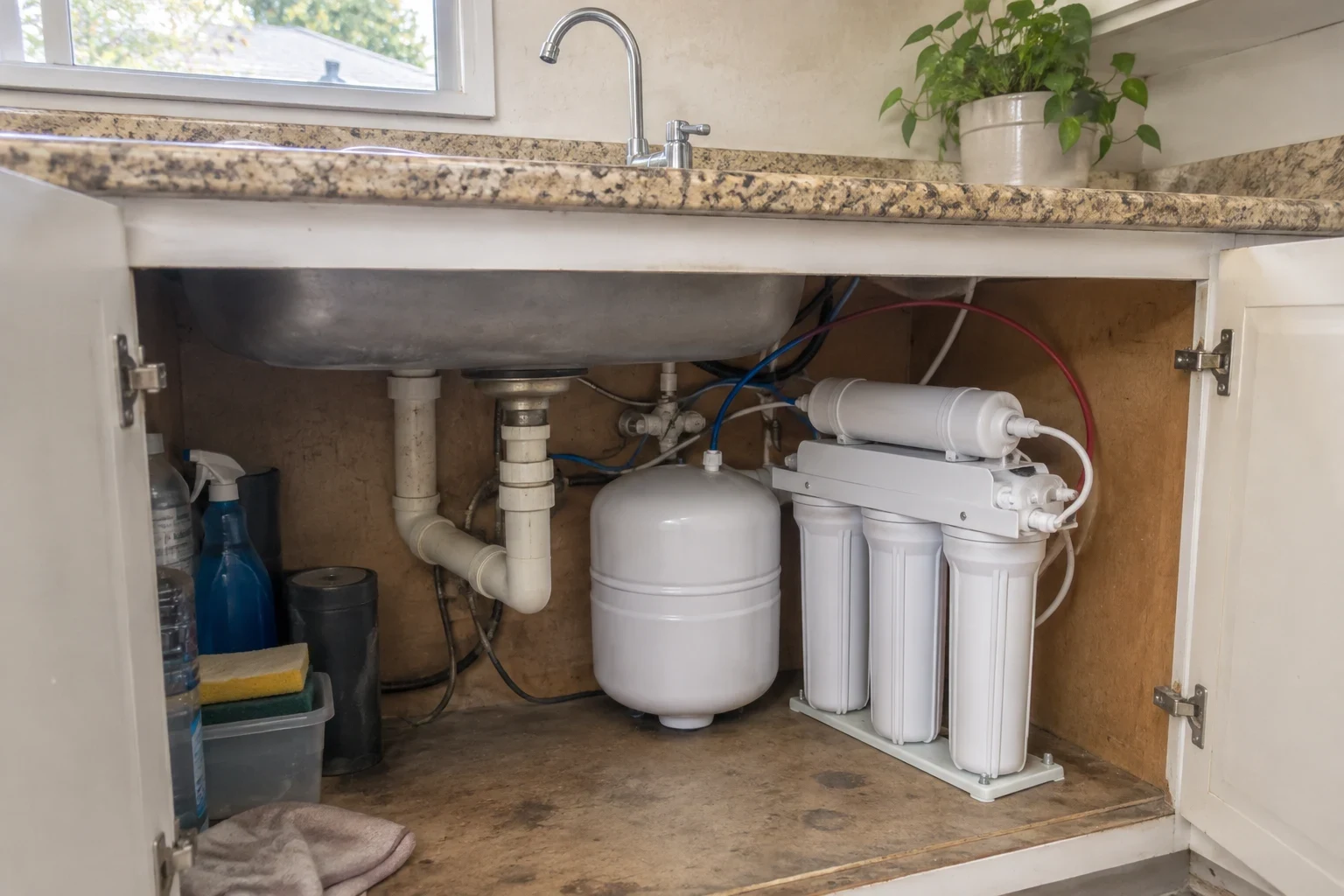
Let's look at your well setup
Tell us what your water is doing and how your pump and pressure tank are laid out. We will explain the right filter and how we would install it safely.